
Two Reports. One District. A Complete Picture.
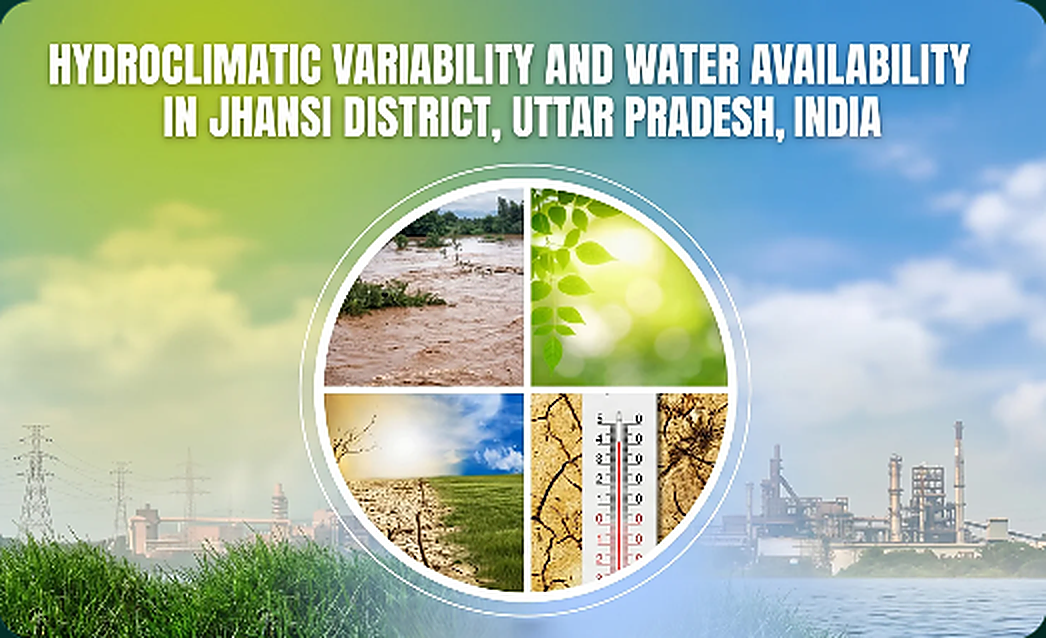
Jhansi: rising summer heat, falling summer rainfall
Block-level risk profile for 8 blocks, built on IMD gridded data.
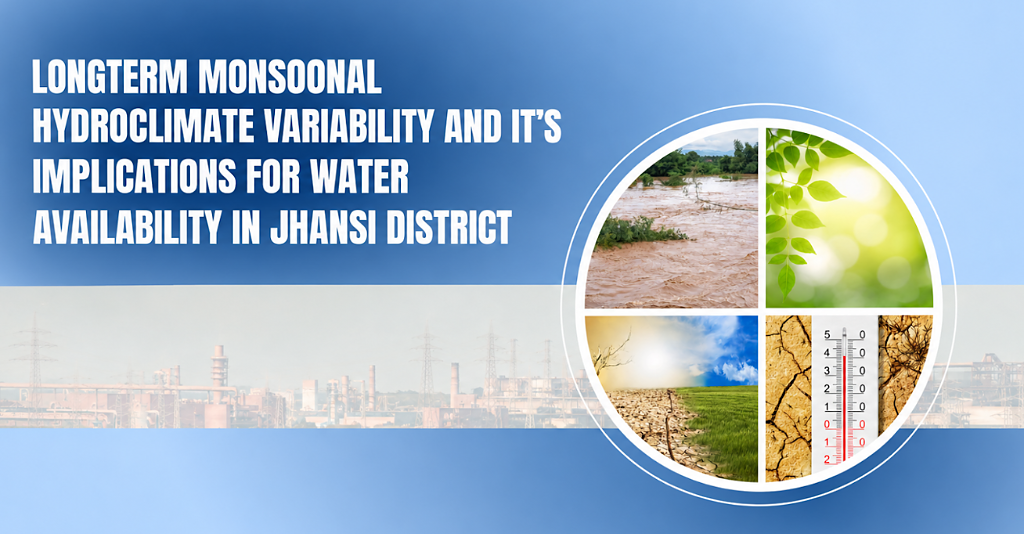
Hydroclimatic Variability & Water Availability in Jhansi District
Longterm monsoonal hydroclimate variability and its implications for water availability across 8 blocks.
About the Research
ClimAgro's District Hydroclimatic Assessments are peer-reviewed research publications examining how shifting rainfall, temperature trajectories, and heat extremes reshape water security and agriculture across vulnerable districts.
Data & Methods
IMD gridded rainfall (0.25°×0.25°, 1901–2024) and temperature records (1°×1°, 1951–2024). Trends computed using Mann-Kendall analysis with Sen's slope. IPCC AR6 1981–2010 baseline.
Who This Is For
Water planners, agricultural policymakers, district administrators, NGO practitioners, climate researchers, and finance professionals engaged in climate risk and adaptation planning across India.
Abstract
Fig. 4b · Average daily monsoon rainfall (mm) across Jhansi blocks, 1981–2010 · IPCC AR6 baseline
Fig. 5 · Block-wise average daily monsoon rainfall comparison — Jhansi District vs UP State · 1981–2010
Fig. 2c–d · Summer mean temperature change (°C) · Jhansi blocks vs UP state · 1951–2024
Fig. 2d · Summer mean temperature trend (°C change) — Jhansi district · 73-year record · 1951–2024
The full 18-page PDF includes detailed block-level spatial risk maps, IMD rainfall trend analysis across all 8 blocks of Jhansi district, heatwave intensity projections, Sen's slope magnitude tables, and policy-ready adaptation recommendations aligned with IPCC AR6 frameworks.
Additional sections cover groundwater depletion indices, seasonal onset shift analysis, Tx5d extreme heat day frequencies, and a comparative risk matrix for agricultural planning across Bundelkhand's most vulnerable blocks.
Free to access — no payment or subscription. Just tell us a little about yourself so we can serve you better.